Thursday 14 January 2016
4.30pm in Seminar Room 2, Department of History and Philosophy of Science
Michael Stolberg (University of Würzburg)
Curing diseases and exchanging knowledge: sixteenth-century physicians and their female patients
 In
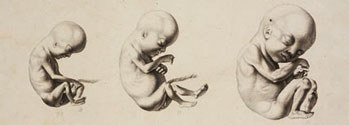
the sixteenth century, 'diseases of women' – thought to originate from
their womb – and matters of generation, pregnancy and childbirth
attracted growing attention in learned medical writing. So far we know
very little, however, about how commonly women consulted physicians –
rather than midwives and wise women – in such matters and what they
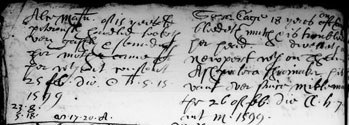
could expect. Drawing on the notebooks and practice journals of
sixteenth-century physicians, this lecture will examine the place of
gynecological and obstetrical problems in ordinary medical practice. It
will trace the ways in which physicians acquired the knowledge and the
skills they needed to diagnose and treat these patients – including
foetal anatomy, manual examination and the use of the speculum. And it
will show that learned physicians were even prepared to take the
empirical knowledge of non-academic healers and ordinary womenfolk
seriously in this domain to which they traditionally had only limited
access.
In
the sixteenth century, 'diseases of women' – thought to originate from
their womb – and matters of generation, pregnancy and childbirth
attracted growing attention in learned medical writing. So far we know
very little, however, about how commonly women consulted physicians –
rather than midwives and wise women – in such matters and what they
could expect. Drawing on the notebooks and practice journals of
sixteenth-century physicians, this lecture will examine the place of
gynecological and obstetrical problems in ordinary medical practice. It
will trace the ways in which physicians acquired the knowledge and the
skills they needed to diagnose and treat these patients – including
foetal anatomy, manual examination and the use of the speculum. And it
will show that learned physicians were even prepared to take the
empirical knowledge of non-academic healers and ordinary womenfolk
seriously in this domain to which they traditionally had only limited
access.
There will be tea before the lecture, at 4pm in Seminar Room 1, and a drinks reception afterwards, at 6pm in Seminar Room 1.
Discussion led by Michael Stolberg
Uroscopic pregnancy diagnosis in early modern Europe
Thursday 14 January 2016
11.30am in Seminar Room 1 – all welcome
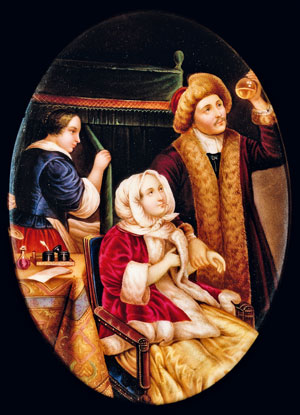
Historians like Barbara Duden have lamented a devaluation of women's authentic experience of 'being with child' by modern methods of 'objective' pregnancy diagnosis. This argument is somewhat at odds with the finding that another 'objective' method – examining women's urine for signs of pregnancy – was widely requested and practised in early modern Europe. Records of inquests against unlicensed uroscopists, physicians' personal notes and case histories and visual representations of uroscopic pregancy diagnosis in early modern genre painting suggest a complex interplay of female expectations, physicians' reservations and a desire to unveil the secrets of women even against their wishes.
Suggested reading: Michael Stolberg, Uroscopy in Early Modern Europe (2015), pp. 1–2, 5–8, 105–10, 117–21, 160–6. Copies of the book and a document consolidating the selected pages are on reserve in the Whipple Library.